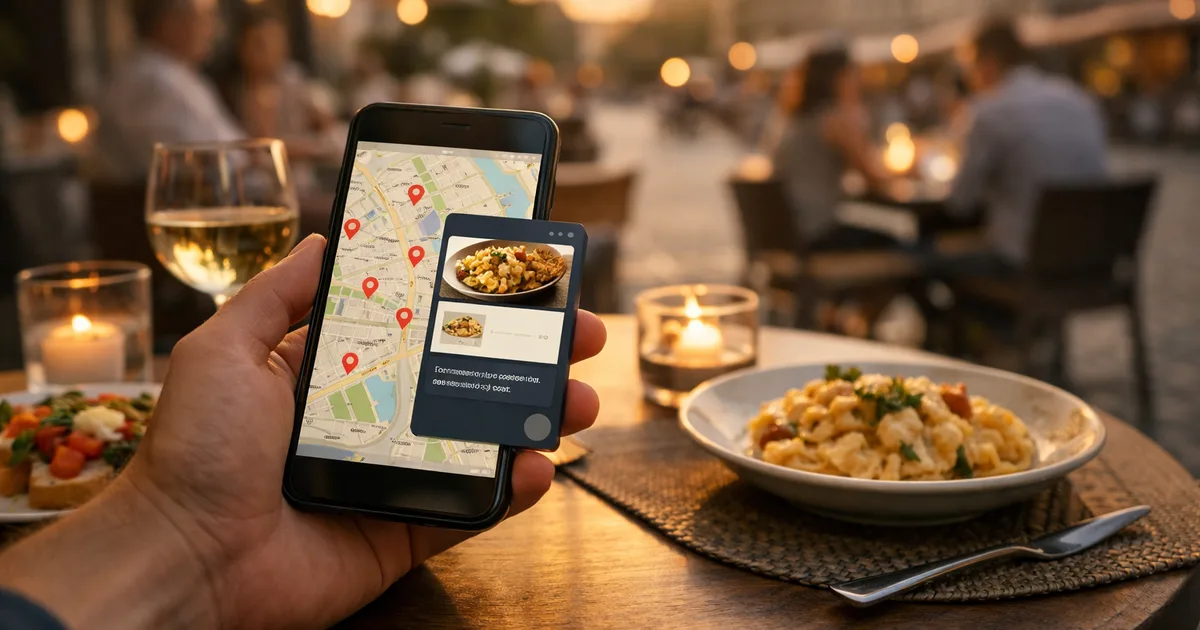
Delivery Hero's AI Agent Boosted Restaurant Orders by 15% — And It Runs on WhatsApp
Delivery Hero's agentic AI assistant went live across 40,000+ restaurants on 13 August 2026. At Glovo, restaurants using it saw a 15% jump in orders. The agent runs via WhatsApp, autonomously develops promotions and ads, responds to reviews, and rewrites menu content — with the owner's explicit approval before any change goes live.

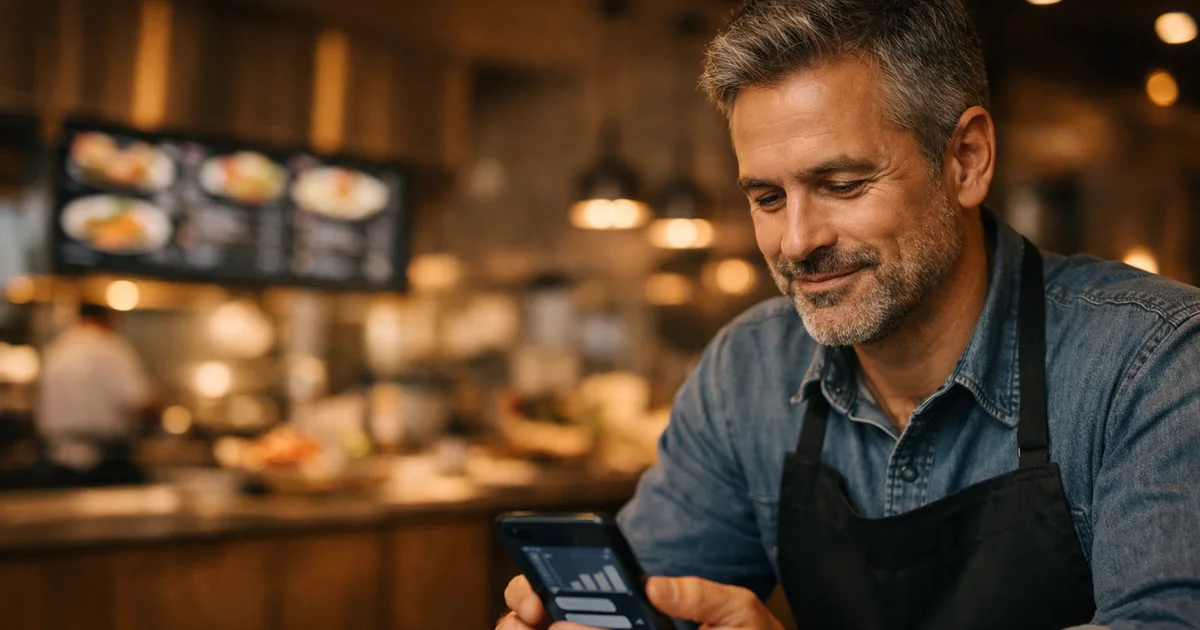
On 13 August 2026, Delivery Hero announced that it had launched an agentic AI assistant for local shops and restaurants across its global platform. The assistant was already live at more than 40,000 restaurants at launch — and at Glovo, Delivery Hero’s brand across Southern Europe, Central Asia and Africa, restaurants using it saw orders jump by 15%. The agent works entirely through WhatsApp and acts autonomously on behalf of owners the moment they approve a suggested action.
What happened at a glance:
- 13 Aug 2026 — Delivery Hero launches agentic AI assistant across its global platform (official press release)
- Live at 40,000+ restaurants on day one across Delivery Hero brands including Glovo, Talabat, Foodpanda, Pedidosya and others
- At Glovo, restaurants using the assistant recorded a 15% increase in orders (EuropaWire)
- The assistant operates through WhatsApp — no new app or dashboard to learn
- Requires explicit partner approval before making any change; learns from rejected suggestions
- Third major AI-powered restaurant tool of summer 2026, joining Square/ChatGPT/Claude (1 Jul) and Google Maps Ask Maps (6 Aug)
What the AI assistant actually does
Delivery Hero’s agentic AI can autonomously develop promotions, run ads, respond to customer reviews, and rewrite menu content — all through a WhatsApp conversation, with no change going live without the owner’s green light. The assistant draws on each restaurant’s own live order data to propose actions tailored to that specific location: which dishes to highlight, which promotions to time, how to respond to a recent negative review.
The approval-before-action design addresses a real concern operators have voiced about autonomous AI tools. Rather than acting unilaterally, the agent presents a proposed change — a discount campaign on a slow Tuesday, a revised dish description — and waits for the restaurant owner to confirm. If they reject a suggestion, the agent incorporates that signal and adjusts future recommendations. Over time, it builds a working model of what that owner will and won’t approve.
Working through WhatsApp is a deliberate choice: it is already open on most operators’ phones throughout the day, requires no installation, and creates no additional platform to log into. The conversation is the interface.
The 15% Glovo result — and what it took
At Glovo, the 40,000-restaurant base that tested the assistant saw orders increase 15% on average — a meaningful result for an AI tool that requires no structural changes to how a restaurant operates. The assistant’s menu-content improvements — cleaner descriptions, better-placed best-sellers, promotions timed to real demand patterns — appear to be the primary driver of that lift.
That outcome matters beyond Delivery Hero’s own ecosystem. It adds a concrete data point to a pattern that AI menu optimization research in 2026 has been pointing toward: how a dish is described, positioned and priced in a digital menu is as commercially significant as the dish itself. An AI that can iterate on that content at scale, with the owner’s approval, closes the gap between what operators know from intuition and what their menus actually communicate.
The common thread: your menu is the raw material
Every AI restaurant tool to launch this summer — whether merchant-facing like Delivery Hero’s or customer-facing like Google Maps Ask Maps — depends on one thing: a live, structured, up-to-date digital menu.
Delivery Hero’s AI agent rewrites and promotes menu content. It can only improve content that already exists in a current form. A restaurant whose digital menu is a static PDF, a photo of a printed card, or an outdated third-party listing gives the agent nothing useful to work with. The broader pattern documented since the Google Maps launch: AI tools in 2026 don’t create menu structure — they amplify it. Operators who have structured, dynamic menus get a 15% order lift from an agent. Those who don’t are invisible to the same agent.
The same logic applies to the customer-facing side. Square’s 1 July launch of ChatGPT and Claude ordering and Google Maps’ 6 August agentic ordering via Square and Toast require a live, machine-readable menu to function at all. A single well-maintained digital menu is now simultaneously the foundation for QR table ordering, AI discovery by diners, AI ordering by agents, and AI optimization by merchant tools.
Your menu is the foundation every AI tool now builds on
Three things this launch tells operators
-
Merchant-facing AI and customer-facing AI are converging on the same requirement. Whether the AI is helping you manage your restaurant (Delivery Hero’s assistant) or helping a diner find and order from you (Google Maps, ChatGPT), the shared prerequisite is a live digital menu with current dishes, prices, descriptions and allergen tags. Fixing that once unlocks both directions.
-
WhatsApp as the AI interface is a signal, not an accident. Delivery Hero chose the messaging app that most restaurant operators already have open all day. Expect other AI tools — review response, promotion scheduling, inventory alerts — to arrive via the same channel. Restaurants that get comfortable with an AI conversation via WhatsApp today will adopt the next generation of tools faster.
-
A 15% order lift is a benchmark, not a ceiling. The 15% figure at Glovo is an average across a wide range of restaurants, many of which presumably had unoptimized menu content before the agent touched it. Restaurants that already maintain clean, well-described, frequently updated menus are better placed to benefit — their menu is richer raw material for the agent to work with.
FAQ
What is Delivery Hero’s agentic AI assistant for restaurants?
Launched on 13 August 2026, it is an AI agent that restaurant owners interact with through WhatsApp. It autonomously proposes and implements personalized growth strategies — promotions, ad campaigns, menu content improvements and review responses — but requires the owner’s explicit approval before any change goes live.
How much did Delivery Hero’s AI agent lift orders at Glovo?
At Glovo, Delivery Hero’s brand in Southern Europe, Central Asia and Africa, restaurants using the AI assistant saw orders increase by 15%, according to Delivery Hero’s August 2026 announcement. The agent was already live across more than 40,000 restaurants globally at launch.
Is this assistant available to restaurants outside Delivery Hero’s platforms?
At launch the assistant is for restaurants already operating on Delivery Hero’s portfolio of delivery platforms — Glovo, Talabat, Foodpanda, Pedidosya and others. Delivery Hero announced plans to expand access to hundreds of thousands of local shops and restaurants worldwide as the rollout continues.
How does this differ from AI ordering tools like Google Maps or Square/ChatGPT?
Google Maps (6 Aug) and Square/ChatGPT/Claude (1 Jul) are customer-facing AI ordering agents — they help diners discover and order from restaurants. Delivery Hero’s assistant is merchant-facing: it helps the operator manage promotions, review responses and menu content to generate more orders, rather than creating a new ordering channel for diners. Both categories depend on the same thing: a live, structured digital menu.
What does this mean for a restaurant’s QR menu?
A live, current, well-structured digital menu is the raw material every AI tool in this wave optimizes or acts on. An outdated or static menu — a PDF behind a QR code — gives Delivery Hero’s agent nothing to improve, Google Maps nothing to act on, and ChatGPT nothing to present to a diner. Every AI tool to launch in summer 2026 shares the same prerequisite: a dynamic menu the operator controls in real time.
Delivery Hero’s agentic AI assistant was announced on 13 August 2026. The 15% order-lift figure and 40,000-restaurant adoption are drawn from Delivery Hero’s official press release and independent coverage by EuropaWire and Retail Technology Innovation Hub. This article will be updated as the rollout expands beyond the launch markets.
Sources
- Delivery Hero launches agentic AI assistant to help local shops and restaurants grow faster — Delivery Hero (official newsroom) , 13 August 2026
- Delivery Hero Expands Agentic AI Strategy With Partner-Facing Business Assistant — EuropaWire , 13 August 2026
- Delivery Hero launch AI assistant for local shops and restaurants with roll-out due across platform — Retail Technology Innovation Hub , 13 August 2026
Tags
Related Articles
Virginia's Updated Allergen Rules Are Live — Sesame Added and QR Codes Approved for All Food Establishments
New York Becomes First US State to Require Allergen Labels on Grab-and-Go Foods — November 12, 2026 Deadline